
Upcoming Events at Holt Probus Club

Ladies Luncheon
We host an annual ladies luncheon where members are welcome to bring their partners for a delicious seasonal menu.
Christmas
Join us for our annual Christmas Celebration on the first Wednesday of December. Enjoy festive food and drinks .
Members Exclusive Visits
Visit to: the RAF Air Defence Museum, Neatishead
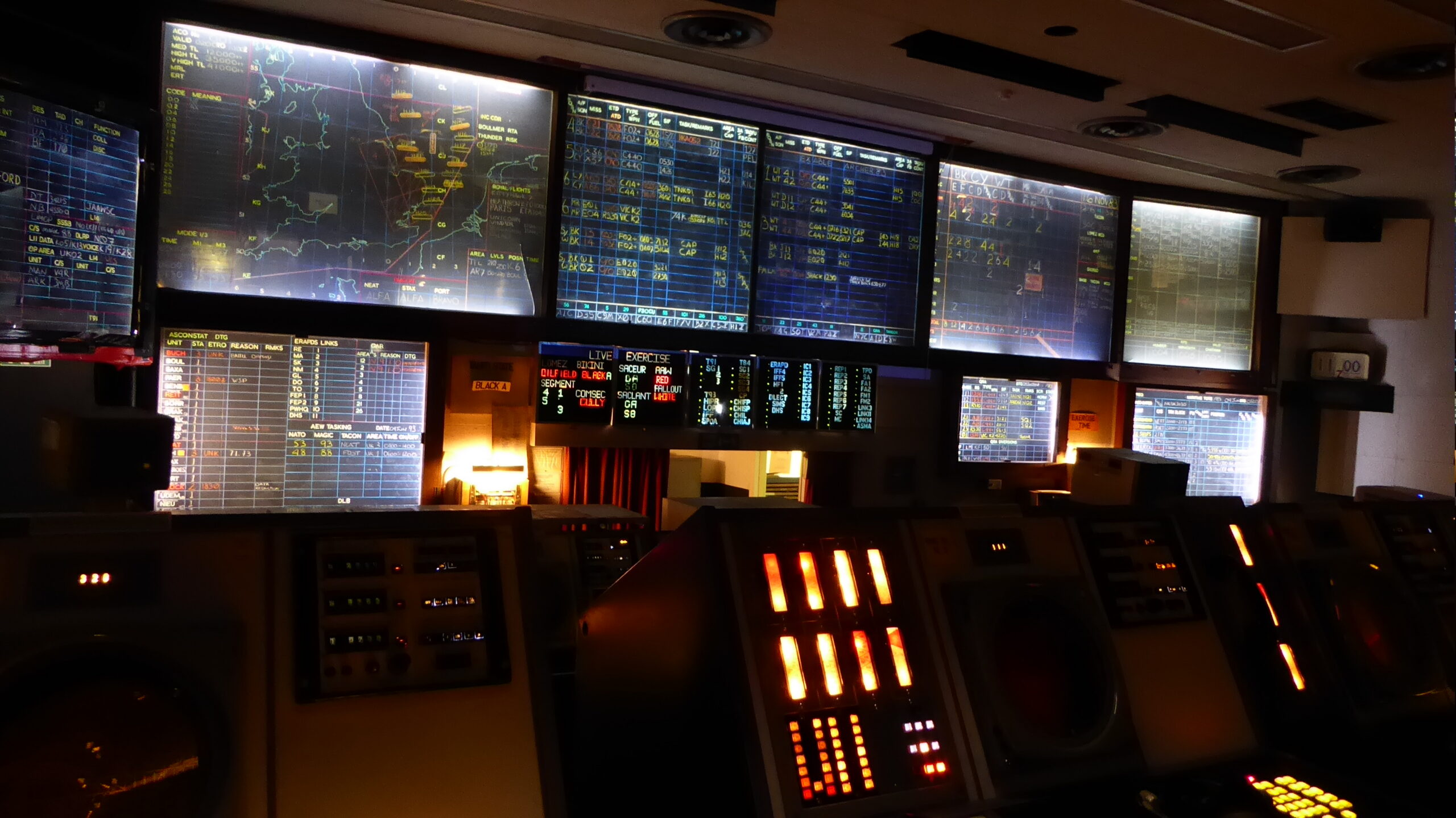
A Group of five members of the Holt Probus Group braved the country lanes and wildlife of North Norfolk to a pre-arranged rendezvous at RAF Air Defence Radar Museum at Neatishead. We were met by Matthew Parrot, the Museum Manager, who, after introductions gave us a brief explanatory history of the museum, took orders for lunch and explained the layout and best route through the facility.
There were two Presentations to attend, each lasting around 30 minutes. One traced the development of Radar from its early beginnings in the late 19th and early 20th centuries when it was observed but not understood how radio waves can be distorted by a metal object, through the development of Radar to its harnessing and exploitation during the Second World War as an effective means to detect incoming airborne aircraft. Dozens of radar stations were positioned (and still are) all up the East coast of England and Scotland and part-way along the south coast looking out to sea. Development was rapid during the War and equipment size reduced until it was possible to fit a radar transmitter and a receiver into an aircraft which enabled targets to be spotted at greater distances than with the naked eye. This really came into its own during night-time raids as enemy night fighters could be spotted from afar.
The second presentation covered the Cold War era and took place in the Cold War Control Room which was fitted out as original but with non-functioning displays which were very realistic. Radar returns from all the now much developed ground stations could be displayed and monitored rather than using telephones and manually positioned models on a large map table of the WWII era. Operators were in direct radio contact with allied interceptor aircraft that were scrambled to investigate unknown aircraft coming from the direction of Russia. Speed and accuracy of detection and action was far quicker than the wartime equivalent.
The Museum contains many rooms full of displays illustrating the whole development of radar with dozens of examples of equipment and it soon becomes clear how stunning the pace of development has been since its inception.
The development picture is completed by outdoor examples of ground based defensive ground to air missiles in the shape of the Bristol Bloodhound and the British Aircraft Corporation Rapier.
The museum is manned by volunteers, all extremely knowledgeable and willing to help. The café is excellent and in all we had a thoroughly good day.
Visit to: Gresham’s School, Holt


Members of Holt Probus Club and some of their wives and friends paid a visit to Gresham’s where they were shown around by Simon Kinder. Simon has inexhaustible energy and total recall as regards past dates and events, and is Head of History at the school.
Many of those present felt that, living as they do in Holt or nearby, they have always known where Gresham’s is without knowing that much about it. Simon put all that right! Founded by Sir John Gresham in 1555, at first it occupied the building in central Holt overlooking the Market Place.
After walking across the Parade Ground – as the largest car park is still known – the first building visited was Big School. This was where the modern Gresham’s grew from, built in the early 1900’s and still the heart of the school. The impressive hall in that building, at one time the Chapel, was when the group visited having some of the intricate window glass repaired; plaques around the walls have the names of distinguished former pupils.
Then, on to the Dyson Building, built from donations from Sir James Dyson who, as a pupil at the school when his father a teacher there died and was allowed to complete his education – for which he was ever grateful. This now is a centre for Science, Technology, Engineering, Arts and Mathematics (STEAM) education. Then, on to the chapel – beautifully built with knapped flint exterior facing and opened in 1916 – which bears due reverence to the former pupils who died in the service of their country in the First and Second World Wars. As well as the abundance of oak within, the chapel is also adorned by red ceramic poppies, some of those that formed the spectacular display at the Tower of London marking the 80th anniversary of the end of World War II (VE Day).
Simon then took the group to see the Theatre in the Woods. This has been the place where concerts and shows have been presented and although the ‘seating’ is normally on steps cut from the bare earth, the stage itself has a housing complete with lighting, etc., built around it.
The visit had been an eye-opener for the Probus Group there – we have driven past the School so often without much knowledge of what it all entails.
Visit to: The Langham Dome
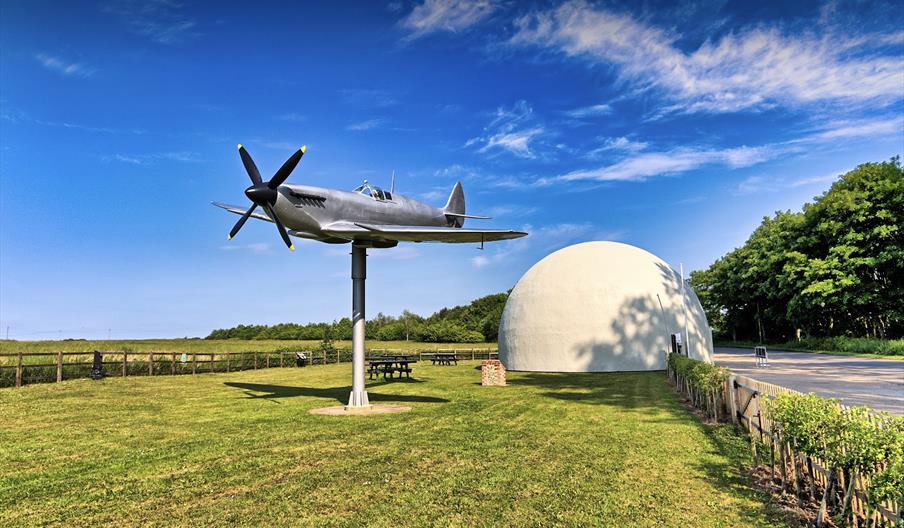
A group of Probus members and one guest were treated to a bespoke tour of the facility and how it came to be. In telling the tale of its history, through audio visual presentations and spoken word, we learnt from our guides Mark Glaister, Scott Eltringham and Mick Barham of how poor the training was in the early stages of WW ll, due to the scarcity of front-line weaponry and the very basic and unsophisticated nature of their training aides. The hit rate achieved by the ground gunners was very poor and this state of affairs did not go unnoticed by a certain Henry Christian Stephens who realised that the key to a successful hit from the ground is to be able to judge how far ahead of the moving target you should aim to ensure that your shells coincide with the target’s position, taking into account its height, track and speed. In order to simulate this situation, on the ground, he came up with the idea of projecting a moving image of a moving target onto a screen (domed, to keep it in focus!). The student has a dummy gun and his sight is through a yellow filter. The gun projects a yellow dot onto the point where the student is aiming. The student can’t see the dot as he or she is looking through a yellow filter – but the instructor can and can judge the proximity to a hit.
Henry lashed up a prototype in his workshop to test out the theory – and it worked. A colleague gained him the visibility of those who matter and in no time his idea was “productionised” and dozens of dome Trainers were erected all around the country resulting in a quantum improvement in the performance of the ground crews and indeed the ability of the trainers to select out from the beginning which of the recruits showed the best potential.
The interior of the dome has been kitted out with a complete projection and simulation capability and we were all able to try our hand at being a trainee gunner! Some of us faired better than others, it has to be said…
There is a full time-line history of the dome development all around the walls and we had plenty of time to peruse at our leisure
The Dome is open to the public every day except Mondays and Tuesdays, which are set aside for pre-arranged group visits. Langham Dome is the only working Dome in the whole of the UK; all others are either derelict or have been destroyed. It was a fascinating insight into a lesser-known jewel of North Norfolk.